

To Issue 185
Citation: Laubscher M, “Enabling a Sustainable Future for pMDIs with Low-GWP Medical Propellants”, ONdrugDelivery, Issue 185 (Apr/May 2026), pp 8–11.
Markus Laubscher discusses the role of pressurised metered dose inhalers in the context of healthcare’s drive towards sustainability, considering the need for lower-global-warming-potential propellants and why it is important to preserve these inhalers as a key aspect of respiratory care.
Sustainability is rapidly becoming one of the defining challenges for the pharmaceutical industry. Healthcare systems around the world are working to reduce their environmental impact while maintaining – and ideally improving – patient outcomes. Globally, healthcare is responsible for an estimated 4.4% of greenhouse gas emissions,1 highlighting the scale of the challenge facing the sector.
Pressurised metered dose inhalers (pMDIs) remain one of the most widely used and clinically important drug delivery systems for asthma and chronic obstructive pulmonary disease (COPD). They are portable, reliable, relatively inexpensive and familiar to both patients and healthcare professionals. For many patient groups, including children, older adults and those experiencing acute exacerbations, they remain the most appropriate delivery platform.
“AS HEALTHCARE SYSTEMS WORK TOWARDS AMBITIOUS DECARBONISATION TARGETS, pMDI PROPELLANTS HAVE BECOME A FOCUS FOR SUSTAINABILITY EFFORTS ACROSS THE RESPIRATORY ECOSYSTEM.”
However, pMDIs are also facing increasing scrutiny because of the propellants that enable their function. Historically, these devices have relied on hydrofluorocarbons (HFCs), such as HFC-134a and HFC-227ea, which have high global warming potentials (GWPs). As healthcare systems work towards ambitious decarbonisation targets, pMDI propellants have become a focus for sustainability efforts across the respiratory ecosystem.
The industry is now moving beyond the question of whether change is needed to how it can be delivered without compromising patient care. Low-GWP propellants, which have now been accepted and are being implemented, provide a clear path to achieving this, enabling more sustainable pMDIs while preserving clinical performance and patient access.
THE GROWING URGENCY OF SUSTAINABLE RESPIRATORY CARE
The intersection of climate change and respiratory health is undeniable. Rising global temperatures, more frequent wildfires and worsening air pollution are all contributing to increasing rates of respiratory disease. Air pollution alone is responsible for an estimated 8.1 million premature deaths globally each year,2 with respiratory disease among the leading causes. Climate change is also altering pollen seasons, thereby increasing allergen exposure, and contributing to more frequent wildfire smoke events, all of which can exacerbate asthma and other respiratory conditions.
Chronic respiratory diseases already affect hundreds of millions of people worldwide. Asthma impacts more than 260 million people globally,3 while COPD affects an estimated 400 million people and remains one of the leading causes of death worldwide.4 At the same time, healthcare systems are under increasing pressure to reduce their own environmental footprints.
Amidst this, pMDIs have emerged as a focal point in sustainability discussions because of their widespread use and measurable carbon footprint – in the UK, they account for around 3% of the UK NHS’ carbon footprint.5 Lifecycle assessments consistently show that the propellant released during pMDI use accounts for over 90% of a pMDI’s greenhouse gas emissions.6 This has prompted the industry to explore alternative approaches that can preserve the clinical advantages of pMDIs while reducing their environmental impact.
DPIs: AN IMPORTANT OPTION, BUT NOT A UNIVERSAL SOLUTION
Dry powder inhalers (DPIs) are often highlighted as a lower carbon alternative because they do not require propellants. From an emissions perspective, lifecycle assessments show that low-GWP pMDIs can dramatically reduce their carbon footprint, bringing them into a similar range to DPIs. One study reported emissions of approximately 2.06 kg CO2-equivalent (CO2e) for a low-GWP pMDI compared with 0.69 kg CO2e for a DPI.7
However, respiratory care is rarely a one-size-fits-all scenario. DPIs rely on the patient generating sufficient inspiratory flow to effectively disperse the powder formulation, which can present challenges for certain patient groups, including young children, older adults and those experiencing severe respiratory distress.
Importantly, incorrect use and the resulting poor disease control can lead to exacerbations requiring medical intervention. These events carry a significant environmental burden, driven by hospital visits, emergency care and additional treatments. Studies have also shown that errors in DPI use remain common, with reports of incorrect technique in up to 76% of patients, potentially reducing treatment effectiveness.8
“CLINICAL GUIDELINES EMPHASISE THE IMPORTANCE OF SELECTING INHALER DEVICES BASED PRIMARILY ON PATIENT CAPABILITY AND CLINICAL NEED.”
For this reason, clinical guidelines emphasise the importance of selecting inhaler devices based primarily on patient capability and clinical need. While DPIs play a vital role in respiratory therapy, they cannot replace pMDIs across all patient populations and treatment scenarios. As a result, the long-term viability of respiratory care will depend on maintaining a diverse range of inhaler options.
THE REALITY OF LOW-GWP PROPELLANTS
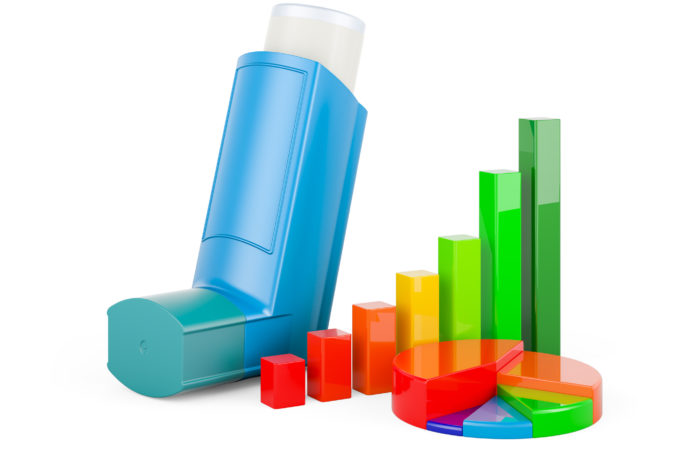
The strategy for reducing the environmental impact of pMDIs is the development of low-GWP propellants. These propellants are no longer theoretical or under investigation – products are being manufactured today and are expected to be introduced to the market imminently (Figure 1).

Figure 1: pMDIs containing low-GWP propellants will soon be available on the market.
Among the available options, HFC-152a has emerged as a particularly compelling solution, alongside other medical propellants, such as HFO-1234ze(E). Compared with traditional propellants like HFC-134a, both HFC-152a and HFO-1234ze(E) offer a dramatically lower GWP while maintaining the physical and performance characteristics required for effective aerosol delivery.
Lifecycle analyses suggest that pMDIs formulated with HFC-152a can achieve reductions in the carbon footprint of the medical propellant of 90% compared with conventional devices containing HFC-134a.9 Crucially, this reduction can be achieved while preserving the familiar device format that patients and clinicians already understand.
From a healthcare perspective, this continuity matters. Device switching can introduce challenges related to patient education, adherence, and pMDI use and technique. By retaining the fundamental operating principles of pMDIs, low-GWP propellants offer the possibility of significant environmental improvement without fundamentally altering the patient experience.

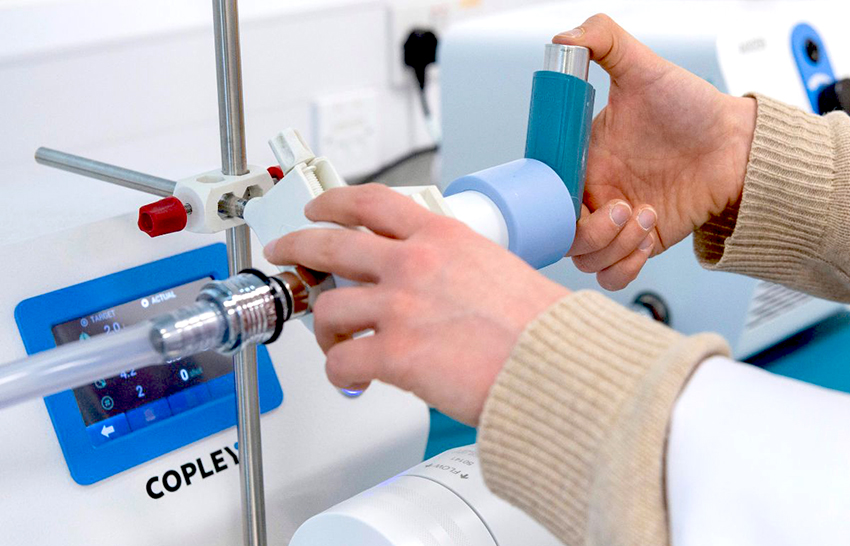
Figure 2: Early adopters of low-GWP propellants have performed extensive testing to demonstrate their commercial viability.
TECHNICAL AND REGULATORY CONSIDERATIONS
Despite their promise, introducing new propellants into pMDIs is far from straightforward. pMDIs are combination products in which the device, formulation and propellant must function together in a carefully balanced system. Extensive development, safety, toxicology, stability testing and regulatory engagement have been successfully carried out, enabling the first low-GWP propellants to reach the point of commercial introduction (Figure 2).

Figure 3: Device experts have successfully developed alternative pMDI components and accompanying infrastructure that are compatible with low-GWP propellants.
Manufacturing infrastructure considerations, including adjustments to filling lines, storage systems and safety protocols, have also been addressed by early adopters (Figure 3). Additionally, regulatory frameworks have been navigated with robust clinical and analytical data demonstrating equivalence in safety, quality and therapeutic performance. As a result, several pharmaceutical companies are now on the verge of introducing low-GWP pMDIs to the market, while others will need to accelerate their efforts to keep pace with this transition.
DELIVERING SUSTAINABILITY WITHOUT COMPROMISE
Respiratory disease is already a major challenge for global healthcare, and demand for effective treatments will continue to grow. Ensuring that patients can retain access to reliable and clinically appropriate pMDI options must remain the industry’s priority.
“THE DEVELOPMENT OF LOW-GWP PROPELLANTS DEMONSTRATES THAT MEANINGFUL ENVIRONMENTAL PROGRESS CAN BE ACHIEVED WITHOUT SACRIFICING THE CLINICAL STRENGTHS THAT HAVE MADE pMDIs INDISPENSABLE FOR MILLIONS OF PATIENTS.”
Simultaneously, the healthcare sector has a responsibility to contribute to global climate goals. The development of low-GWP propellants demonstrates that meaningful environmental progress can be achieved without sacrificing the clinical strengths that have made pMDIs indispensable for millions of patients.
By investing in innovation, supporting collaboration across the respiratory care ecosystem and maintaining a patient-centric approach, the pharmaceutical community has an opportunity to reshape the future of inhaled drug delivery. The transition to lower-GWP propellants is not simply an environmental initiative – it represents a crucial step towards ensuring that respiratory care remains both clinically effective and environmentally sustainable for generations to come.
REFERENCES
- “Health Care’s Climate Footprint: How The Health Sector Contributes To The Global Climate Crisis And Opportunities For Action”. Green Paper, Health Care Without Harm, Sep 2019.
- “State of Global Air Report 2024”. Report, Health Effects Institute, Jun 2024.
- “Asthma Fact Sheet”. WHO, May 2024.
- de Oca MM, “The global burden of COPD: epidemiology and effect of prevention strategies”. Lancet Respir Med, 2025, Vol 13(8), pp 709–724.
- “Delivering a ‘Net Zero’ National Health Service”. Report, NHS England, Oct 2020.
- Jeswani HK, Azapagic A, “Life cycle environmental impacts of inhalers”. J Clean Prod, 2019, Vol 237, art 117733.
- King J et al, “Decarbonising Respiratory Care: The Impact of a Low-Carbon Salbutamol Pressurised Metered-Dose Inhalers”. Allergy, Nov 2025, online ahead of print.
- Chrystyn H et al, “Device errors in asthma and COPD: systematic literature review and meta-analysis”. Npj Prim Care Resp Med, 2017, Vol 27, art 22.
- “Zephex® 152a: Low-global warming potential medical propellant”. Web Page, Orbia Fluor & Energy Materials, accessed Apr 2026.