

To Issue 185
Citation: Tilley A, Cook D, “Sustainability in Drug Delivery”, ONdrugDelivery, Issue 185 (Apr/May 2026), pp 29–33.
Adam Tilley and David Cook, explore how carbon footprint considerations can be integrated into the drug delivery device design lifecycle, highlighting key sustainability decisions faced by design engineers and emerging tools that support those evaluations.
The healthcare sector accounts for approximately 4–5% of global CO2 emissions, with manufacturing, packaging and transportation representing the largest contributors.1 As of 2025, this share of medical devices and associated packaging represented US$25.1 billion (£18.7 billion) and is projected to rise to $47.1 billion by 2033.2,3
Sustainability regulations, including the UN Sustainable Development Goals and the EU Corporate Sustainability Reporting Directive, are increasing accountability for CO2 emissions. As a result, the medical device and pharmaceutical sectors – especially single-use drug delivery systems such as autoinjectors – are under increasing pressure to adopt more sustainable practices.4
Single-use disposable devices represent the third-largest contributor to device-related emissions, after facility energy use and pharmaceutical production. Approximately 70% of injectors are single-use devices. The expanding glucagon-like peptide-1 (GLP-1) drug market, which currently relies heavily on single-use injectors, could triple in value by 2033, resulting in hundreds of millions of additional devices being manufactured.5
With the healthcare market trending towards an increase in single-use medical devices, businesses must consider how to keep up with the changing regulatory landscape to avoid fines or greater legal ramifications. For example, the EU Corporate Sustainability Reporting Directive came into effect in 2023, calling for hospitals, care homes, device manufacturers and all others involved in the supply of drug delivery devices to report their environmental impact, from initial supply of materials to final disposal.6 Additionally, France has introduced the Anti-Waste and Circular Economy (AGEC) legislation, which puts the responsibility on the manufacturers to reduce waste,7 while Germany has introduced the Corporate Due Diligence in Supply Chains Act of 2021, which mandates that large companies must account for the environmental risks associated with their supply chains.8
These legislative measures indicate a growing focus on the mitigation of manufacturers’ environmental impact, which leads to more decisions for design teams. When a product is designed, the end-of-life must be considered – will it be reused, recycled or repaired? It is no longer enough to just dispose of a product; accountability at all stages of the product’s lifecycle is being increasingly placed on the manufacturer.
“OVER 70% OF A DEVICE’S CARBON FOOTPRINT IS DETERMINED URING THE EARLY CONCEPT DEVELOPMENT PHASE.”
SUSTAINABILITY AS AN INPUT REQUIREMENT
Over 70% of a device’s carbon footprint is determined during the early concept development phase. Early integration of design for sustainability into device development is critical to reducing environmental impact while balancing functionality, usability, cost and quality. Establishing specific, measurable and attainable sustainability goals within initial device requirements is key to success. A weighted scoring and selection process can then be used for a holistic approach to assess sustainability in the context of other requirements.
If sustainability factors are only considered in the later stages of the development process, the level of difficulty in making beneficial changes increases significantly, while the impact decreases, as shown in Figure 1. Later alterations also add significant cost and time to the development lifecycle.

Figure 1: Device sustainability – ability to impact versus effort required.
Some of the greatest benefits to environmental impact can be achieved through reducing transportation and energy-related costs and by considering early on where and how a device will be manufactured. For example, an injection-moulding facility with energy-efficient machine co-ordination, on-site renewable energy generation and battery storage can reduce CO2 emissions by hundreds of metric tonnes compared with conventional facilities. Including these efficiencies when estimating the carbon footprint at the design stage may allow for compromises elsewhere in the design to achieve the same sustainability targets.
DESIGN FOR SUSTAINABILITY
A critical aspect of design for sustainability is identifying effective opportunities for reducing the carbon footprint of a product across three stages – concept selection, detailed optimisation and detailed simulation (Figure 2).

Figure 2: Early-stage design process elements.
Stage 1: Concept Selection, Modular Design
Specific logistical and disposal requirements for integral parts can make an entire device single use. By shifting to a modular design approach, a device can be made reusable with individual single-use components. Designing common modules for use across multiple configurations and allowing for separation of differently disposable elements can significantly reduce a device’s waste footprint and recycling complexity. Using autoinjectors as an example, prefilled syringes, cartridges and needles all contain opportunities for modular compatibility to help mitigate the device carbon footprint.
Component Reduction
Simplifying a device is often the most straightforward way to reduce its carbon footprint, even when it requires some novel engineering. A reduction in the types and volume of material used can make a device’s introduction into a circular economy more direct, which results in positive outcomes for transport, manufacture and assembly.
Stage 2: Detailed Optimisation, Design for Manufacturing
In mass-produced autoinjectors, injection-moulding of the plastic components is a key opportunity improving sustainability. The total material and energy used per shot can be reduced by coring out features, optimising runner systems and selecting resins that have lower processing temperatures.
Design for Assembly
The assembly process of a device is an essential consideration when maturing a prototype towards production to ensure that desired production rates can be met while maintaining device functionality. However, disassembly for potential recycling – or recovery of partially assembled devices, unused devices and post-use devices – is often overlooked. New legislation, such as the AGEC law, is putting increasing focus on end-of-life optimisation. To this end, structured device disassembly is just as vital as reliable assembly. The ability to recycle manufacturing rejects, post-use and post-expiry devices to reprocess their materials should be engrained into the design. Methods of optimising this include:
- Avoiding lubricants and solvents that can contaminate waste streams and eliminate the circular economy of a device.
- Minimising the use of fasteners such as screws or bolts that make disassembly less viable. If these are required, ferrous materials are preferred to allow for magnetic separation.
- Limiting high-energy joining methods such as ultrasonic and laser welding.
- Avoiding inks or paints that can contaminate plastic batches; use embossing, debossing or laser marking instead.
- Reducing the number of different materials used to make disassembly and recycling easier and more straightforward.
While some components are inherently single-use and must be disposed of, reducing the embedded energy wherever possible is essential in the design for assembly process.
Stage 3: Detailed Simulation, Material Selection
As discussed, optimising component material selection is highly valuable in a sustainable design. However, understanding the most sustainable material to progress at the early design stage can be difficult. Considerations include:
- Environmental impact of the material production
- Carbon footprint of the supply chain for a given material
- Viability of the use of recycled materials or renewable feedstock
- The sustainability credentials of a material supplier
- The expected end-of-life of the material
- Viability of recycling.
For resins in particular, the feedstock used is critical. Sustainably produced medical-grade materials are available, made up of 95–100% biocontent (biogas) and functionally almost identical to their existing non-sustainable counterparts. These materials may reduce carbon footprint by more than 50% compared with fossil-based alternatives. The race to get a drug delivery device to market, alongside the associated drug development timeline, can be intense, so sustainable materials should be considered as early as possible, based on information sharing throughout the supply chain and the use of lifecycle analysis (LCA) tools.
“MITIGATING THE CARBON FOOTPRINT OF A DEVICE IN THE EARLY DESIGN STAGE IS A DIFFICULT TASK THAT INVOLVES ESTIMATING THE IMPACT OF ALL AVAILABLE DESIGN CHOICES.”
ENGINEERING TOOLS
Mitigating the carbon footprint of a device in the early design stage is a difficult task that involves estimating the impact of all available design choices. LCA tools evaluate environmental impacts across a product’s lifecycle – from raw material extraction to end-of-life disposal – supporting more sustainable design decisions. Considerations include raw material extraction, component manufacturing and transportation, and up-to-usage and end-of-life disposal or recycling. This relies on standardised procedures defined in ISO 14040 and 14044, as well as thorough databases with environmental and sustainability information that quantify environmental impacts such as energy usage, carbon footprint, water consumption and pollution. These tools allow for the simulation of different configurations to equip design engineers with the information needed to make more sustainable decisions.9
Different LCA tools exist and have varied use cases. Some are designed for quick assessments at an early stage to gauge feasibility and integrate with workflows, while others offer the ability to give feedback into a computer-aided design environment of real-time environmental considerations, or even develop a supply-chain digital twin for real-time impact analysis.10
LCA tools are useful under the right circumstances but can be limited by the quality of the databases that they pull from, as well as the experience of the user. Detailed analyses require high-quality granular data, which can be difficult to obtain from suppliers, especially in complex supply chains. As such, simulations must sometimes be performed using generic data relating to materials, energy and logistics for comparative assessments only. This can be mitigated by engaging with large manufacturers that have experience in the drug delivery industry and access to global suppliers.
Case studies have shown that the assessment can also produce varied results depending on user experience and the tool being used. While the same rough conclusions can be reached, some parameters can strongly influence the result, meaning that, depending on how knowledgeable the user is, the tool can influence them to an incorrect conclusion.11
LCA tools are best used when implemented at early-stage design development and developed with a level of flexibility in the models to account for risk of later change in the design.
CASE STUDY
The sustainability benefits of early-stage design decisions can be demonstrated using the example of an autoinjector platform, with the key design objectives of:
- Enhancing sustainability and reducing environmental impact
- Minimising cost while supporting a broad product portfolio
- Providing a configuration for connectivity.
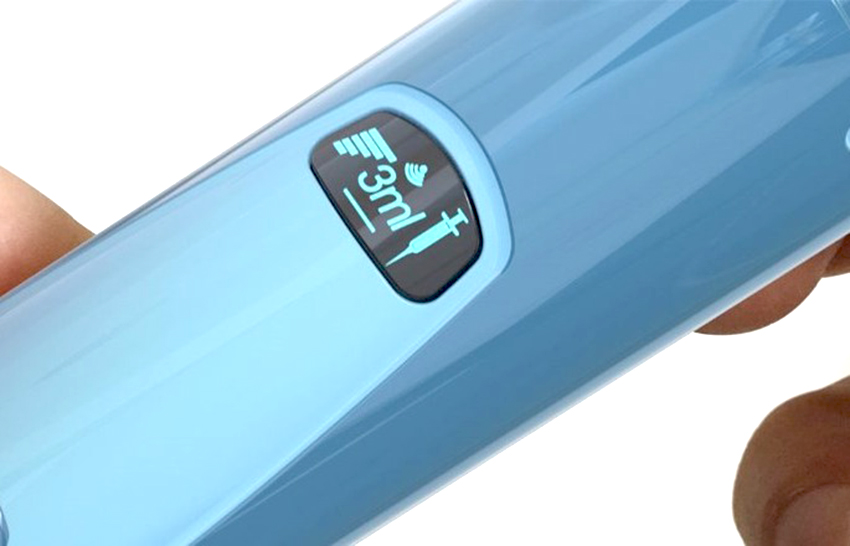
These objectives led to a design based on a novel modularisation approach, featuring a reusable spring-loaded drive unit coupled with single-use cassettes. As previously stated, the use of modularisation provides a significant reduction in single-use materials and embedded energy due to the disposal of the cassettes rather than an entire autoinjector device. This modularity could be extended to integrate electronics, sensors and wireless connectivity by pairing with a home hub for automatic data transfer and device charging.
Compared with traditional 2.25 mL single-use autoinjectors, the design demonstrated an approximately 80% reduction in lifecycle carbon footprint. This was achieved through modular design, sustainable material choices and advanced assembly methods, which were considered throughout development.
Connectivity in autoinjectors enables automated data transfer to healthcare providers, reducing the need for in-person visits and contributing to further lifecycle emissions savings.
AUTOINJECTORS AND WHAT LIES AHEAD
The GLP-1 market is expected to grow at a compound annual growth rate of 12.4%, while the insulin delivery device market is projected to grow by 7.9% annually.5,12 There is some uncertainty of the direction of the GLP-1 form factors market, as recent clinical trials have shown efficacy of oral therapies, which could lead to a shift away from autoinjector use.13 Conversely, other studies have shown that, while oral solutions are appropriate for targeting diabetes and weight loss, injected therapies remain the more effective option for weight loss.14 This suggests that autoinjector demand will continue to grow, even if not at the forecasted 12.4% rate.
“COLD CHAIN REQUIREMENTS FOR TEMPERATURE-SENSITIVE THERAPIES ARE A SIGNIFICANT CONTRIBUTOR TO THE CARBON FOOTPRINT OF DRUG DELIVERY SYSTEMS, DRIVEN BY HIGH ENERGY CONSUMPTION DURING STORAGE AND TRANSPORT.”
Cold chain requirements for temperature-sensitive therapies are a significant contributor to the carbon footprint of drug delivery systems, driven by high energy consumption during storage and transport.15 There is an industry focus on the development of drug reconstitution models to remove the need for cold chain storage for some drug therapies. Where possible, this carbon reduction may offset the impact of the delivery device, although this will also drive more complex device development with solutions for controlled mixed- and multi-chambered devices.
CONCLUSION
Designing sustainable drug delivery devices remains complex. However, integrating sustainability considerations early in the design process enables greater flexibility and impact in reducing lifecycle carbon emissions, with minimal effect on cost and development timelines. Defining sustainability goals as an input requirement is necessary to better realise opportunities for carbon reduction during design development for manufacturing and assembly, and as a critical factor in other business strategy decisions.
REFERENCES
- Or Z, Seppänen A-V, “The role of the health sector in tackling climate change: A narrative review”. Health Policy, 2024, Vol 143, art 105053.
- Vienken J, Boccato C, “Do medical devices contribute to sustainability? The role of innovative polymers and device design”. Int J Artif Organs, 2024, Vol 47(4), pp 240–250.
- “Medical Polymers Market (2026 – 2033)”. Grand View Research, accessed Apr 2026.
- “The 17 Goals”. United Nations, accessed Apr 2026.
- “GLP-1 Receptor Agonist Market (2026 – 2033)”. Grand View Research, accessed Apr 2026.
- “Implementing and delegated acts – CSRD”. European Commission, accessed Apr 2026.
- “A French act of law against waste and for a circular economy”. European Circular Economy Stakeholder Platform Feb 2020.
- “Guide to the German Supply Chain Due”. PDF, TaylorWessing, 2021.
- Quernheim N, Winter S, Arnemann L et al, “Concept for the Evaluation and Categorization of Sustainability Assessment Methods and Tools,” Manufacturing Driving Circular Economy, 2023, pp 721–728.
- Su D, Ren Z, Wu Y, “Guidelines for Selection of Life Cycle Impact Assessment Software Tools”. In “Sustainable Product Development”, May 2020, pp 57–70.
- Pongérard M, Augustin FS, Paredes M, “Comparison of Tools for Simplified Life Cycle Assessment in Mechanical Engineering”. In “Advances in Design Engineering II”, 2022, pp 71–80.
- “Insulin Delivery Devices Market (2024 – 2030)”. Grand View Research, accessed Apr 2026.
- Santulli G, “From needles to pills: oral GLP-1 therapy enters the obesity arena”. Cardiovasc Diabetol Endocrinol Rep, 2025, Vol 11(1), p 31.
- Pinto M, Brennan L, Diehl K et al, “Real-World Comparison of Oral Versus Injectable Semaglutide for the Reduction of Hemoglobin A1C and Weight in Patients with Type 2 Diabetes”. J Pharm Technol, 2025, Vol 41(1), pp 22–31.
- Nadimuthu LPR, Victor K, “Environmental friendly micro cold storage for last-mile Covid-19 vaccine logistics”. Environ Sci Pollut Res Int, 2021, Vol 29(16), pp 23767–23778.